
To ship art, cover the surface with acid-free glassine, add corner protectors, sandwich flat pieces between two sheets of foam board, wrap them in bubble wrap and float them in a snug box with 2 to 3 inches of cushioning on every side. Unframed prints and posters can be rolled image-side out in a rigid mailing tube instead. Then insure the piece for its full value and pick a tracked USPS or UPS service.
The right method depends on whether the piece is flexible or rigid. Rolling a print saves space, but rolling a stretched canvas or framed piece cracks the paint and breaks the glass. This guide gives you the method for each type of art, the packing order and the carrier rules that matter for large, flat packages.
Which Packing Method Fits Your Type of Art?
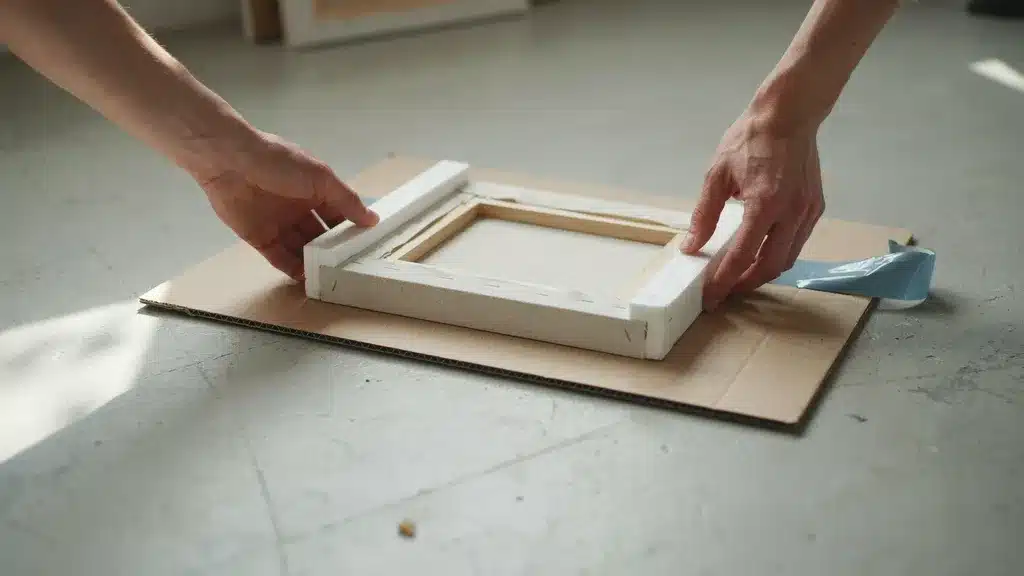
Start with what you are sending. Flexible paper art can roll, while anything stretched, mounted, framed or glazed must ship flat.
| Art type | Ship it | Key protection |
|---|---|---|
| Unframed prints and posters | Rolled in a rigid tube, or flat between boards | Glassine or tissue wrap, tube end caps taped shut |
| Photographs (8×10 and smaller) | Flat in a rigid mailer | Sleeve plus two stiffeners |
| Watercolors and works on paper | Flat | Glassine, then foam board on both sides |
| Stretched canvas | Flat in a box | Glassine, corner protectors, a board over the face |
| Framed art with glass | Flat in a double-wall box | Painter’s tape grid on the glass, corner protectors, foam board |
| Large or high-value originals | Box-in-box or a crate | Double boxing, full declared value |
Small photos are the easiest case, and our guide on the best way to mail an 8×10 photo covers them on their own.
How Do You Pack Flat Art Like Canvas and Framed Pieces?

The order of the layers matters more than the materials. Nothing sticky or textured should touch the art surface, so glassine always goes on first and bubble wrap always goes on last.
- Photograph the piece: take clear photos of the front, back, signature and corners for your records and any claim.
- Glassine first: wrap the surface in acid-free glassine and tape the glassine to itself, never to the art.
- Protect glass: on framed pieces, apply a grid of low-tack painter’s tape across the glass so shards stay in place if it breaks. Do not use this on acrylic glazing, which scratches.
- Corner protectors: fit foam or cardboard corner protectors on all four corners of the canvas or frame.
- Foam board sandwich: place a sheet of foam board or rigid cardboard over the front and back, slightly larger than the piece, and tape the sheets together.
- Bubble wrap: wrap the sandwich in two or three layers of bubble wrap.
- Box it: use a box 2 to 3 inches larger than the wrapped piece on every side, fill the gaps, and shake-test it. For valuable or glazed work, put that box inside a second box with more cushioning.
- Seal and label: tape every seam and mark the box “Fragile: Artwork” and “Do Not Lay Flat” if you want it carried upright.
The same layered approach protects antiques and heirlooms, and our guide on shipping antiques safely covers the box-in-box method in more depth. For seasonal decor with similar fragile parts, see our guide on how to ship a wreath.
How Do You Ship Rolled Prints and Posters?
Roll unframed paper art around a smaller tube or acid-free paper, image side out, with a sheet of glassine or tissue over the face. Rolling with the image outward means the print relaxes flat with less curl when it is unrolled.
- Use a tube at least 2 inches longer than the paper’s width, with thick walls and plastic end caps.
- Fill the space at each end with crumpled paper so the roll cannot slide.
- Tape the end caps on, since loose caps are a common way prints get lost or creased.
- Never roll stretched canvas, mounted prints, pastels or anything with heavy paint texture.
Our guide to shipping tubes, their sizes and how to ship in one helps you pick the right diameter and length.
Which Size Limits and Surcharges Apply to Art?
Art packages are large and flat, so their size usually matters more than their weight. Keep the box as small as your padding allows, because these thresholds add fees or surcharges:
| Carrier rule | Threshold |
|---|---|
| USPS dimensional weight | Packages over 1 cubic foot (1,728 cubic inches) |
| USPS nonstandard fees | Longer than 22 inches, longer than 30 inches, or over 2 cubic feet |
| USPS maximum size | 108 inches length plus girth (Priority Mail); 130 inches (Ground Advantage) |
| USPS maximum weight | 70 pounds |
| UPS Additional Handling | Longest side over 48 inches, second-longest side over 30 inches, or over 50 pounds |
| UPS maximum size | 108 inches long, 165 inches length plus girth, 150 pounds |
Our guide to shipping large boxes, dimensional weight and surcharges shows how to measure and calculate these. Very large pieces or crated work that exceeds parcel limits ships as freight, and ParcelPath’s PalletPath service handles LTL freight.
Which Carrier and Service Should You Use to Ship Art?
For small and medium pieces, USPS Ground Advantage and Priority Mail are usually the most practical, especially for tubes and boxes under 22 inches long. For large framed pieces, compare USPS and UPS Ground, since the size rules above can make either one the better fit.
| Service | Delivery estimate | Included coverage | Best for |
|---|---|---|---|
| USPS Ground Advantage | 2–5 days | Up to $100 | Tubes, prints and small canvases |
| USPS Priority Mail | 2–3 days | Up to $100 | Faster delivery of small framed pieces |
| USPS Priority Mail Express | 1–3 days, money-back guarantee | Up to $100 | Deadlines for shows and exhibitions |
| UPS Ground | 1–5 business days | Up to $100 declared value | Large, heavy or double-boxed work |
ParcelPath is free to use, with no subscription or per-label fee, and gives up to 89% off USPS and up to 85% off UPS retail rates. You can compare live USPS and UPS rates for your art package in the ParcelPath rate calculator, or read our shipping calculator guide comparing USPS and UPS rates. Print the label at home with one of the best labels and printers for shipping, or skip the printer with a USPS Label Broker code at the Post Office or a UPS Mobile Barcode at The UPS Store.
How Do You Insure Art When You Ship It?
Declare the artwork’s full value when you buy the label, and keep proof of value such as a sales receipt, invoice or appraisal. Ground Advantage, Priority Mail and Priority Mail Express include up to $100 of insurance, and USPS sells extra coverage for merchandise up to $5,000 on Ground Advantage.
UPS includes up to $100 of declared value and lets you declare more. Its terms set rules for high-value packages, including where they can be dropped off and when a signed high-value shipment summary is needed, so read the UPS Tariff before shipping an expensive original. Our explainer on what declared value means covers how carriers use it, and ParcelPath offers Shipsurance coverage when you create a label.
Carriers can deny damage claims when packaging is judged inadequate. Your before-and-after photos and the glassine, corner protector and foam board layers described above are what make a claim payable.
What Goes Wrong When Shipping Art, and How Do You Avoid It?

- Bubble wrap directly on the art: it can imprint on paint and varnish. Always use glassine first.
- Rolling rigid work: stretched canvas and framed pieces crack when rolled. Ship them flat.
- An oversized box: extra inches can trigger dimensional weight, USPS nonstandard fees or UPS Additional Handling.
- Loose tube caps: tape them on, and fill the ends so the roll cannot slide.
- Underinsuring: the included coverage is far below the value of most originals.
- Shipping wet work: oils and varnish need to cure fully, or glassine and wrap will stick to the surface.

If you sell your work online, our Crafters and Creators hub covers shipping for handmade products, and our separate guide on shipping artwork safely collects quick tips for galleries and collectors.
Frequently Asked Questions
How do you pack a painting for shipping?
Wrap the painting’s surface in acid-free glassine, add corner protectors, and sandwich it between two sheets of foam board. Wrap that in two or three layers of bubble wrap and place it in a box 2 to 3 inches larger on every side, with void fill so it cannot move. Never let bubble wrap touch the paint directly.
Should you ship art flat or rolled?
Roll unframed prints, posters and other flexible paper art, image side out, in a rigid mailing tube. Ship stretched canvas, framed art, mounted pieces, pastels and watercolors flat between foam board. Rolling rigid or heavily textured work cracks paint, breaks glass and damages frames, so if in doubt, ship it flat.
What is the best way to ship framed art with glass?
Put a grid of low-tack painter’s tape across the glass so it holds together if it breaks, then wrap the frame in glassine, add corner protectors and sandwich it between foam board. Wrap it in bubble wrap and pack it in a double-wall box, ideally inside a second box. For valuable pieces, ask the framer to swap glass for acrylic.
How do you avoid surcharges when shipping large art?
Size the box to the art plus padding and no more. USPS adds nonstandard fees to packages longer than 22 inches and again above 30 inches or 2 cubic feet, and UPS adds Additional Handling when the longest side exceeds 48 inches. Compare both carriers for borderline sizes, since one often handles a given box size better.
Sources
- USPS: Ground Advantage (size limits, dimensional weight, nonstandard fees, insurance)
- USPS: Priority Mail
- USPS: Priority Mail Express
- UPS: Package dimensions and weight
- UPS Tariff/Terms and Conditions of Service (size, weight and high-value package rules)
Part of our Shipping Guides hub. Selling handmade art? See our Crafters and Creators guide.
In this section:
- How to Ship Watercolor Paintings
- How to Ship Framed Artwork
- How to Ship Art Prints
- How to Ship a Canvas Painting
- How to Ship Posters
- How to Ship a Painting
- Best Way to Mail 8×10 Photo
- How to Ship a Wreath
- Ship Art
- Shipping Artwork Safely


