
Table of Contents
- Key Takeaways
- What is ParcelPath, and why use it to ship produce?
- What produce are you shipping, and where do you start?
- What do you need before shipping produce?
- How do you pack produce so it arrives fresh?
- How do you ship produce with ParcelPath, step by step?
- How much does it cost to ship produce?
- Hardy or delicate — what changes?
- What goes wrong when shipping produce — and how do you avoid it?
- Ship your produce for less
- FAQ: How to Ship Produce
How do you ship produce? Pick firm, just-ripe fruits and vegetables, pack them in a ventilated box that allows airflow, add gel packs and insulation for delicate or warm-weather items, and ship fast. Use ParcelPath to compare discounted rates 60-89% off.
Key Takeaways
- ParcelPath is free to use — no monthly fee, no minimums — and passes commercial UPS and USPS rates 60-89% below retail.
- Ventilation is critical. Use boxes or crates with vent holes so heat and moisture escape — trapped humidity is what grows mold.
- Ship firm and just-ripe. Produce keeps ripening in transit, so pick items slightly under-ripe and cushion each piece so it can’t bruise.
- Use the season: in cool weather, ventilate the box to use the outside air as a natural fridge; in heat, add gel packs and ship faster.
- Part of ParcelPath’s perishable food shipping — covers fruit like apples, bananas, and tomatoes.
- The ParcelPath flow is three actions: enter package details → compare rates & print → drop off or schedule pickup.
What is ParcelPath, and why use it to ship produce?
ParcelPath is a free shipping platform that gives individuals and small businesses access to commercial UPS and USPS rates — the same 60-89%-off pricing high-volume shippers get — with no monthly fees or minimums. You pay only for the postage you actually buy.
Fresh produce needs fast service to arrive in good shape, and speed is where retail prices hurt. ParcelPath lets you compare discounted UPS and USPS rates side by side, so a farm stand, grower, or home gardener can buy a fast service for far less and get produce there before it turns.
You also create and print the shipping label at home and drop off or schedule a pickup.
What produce are you shipping, and where do you start?
Hardy fruits and vegetables ship easily; soft, delicate ones need more cushioning and cold. The table links to a guide for the most-shipped items. Start with what you are sending.
| Produce | How to ship it |
|---|---|
| Apples | Hardy; wrap each, ventilated box |
| Bananas | Ship green; cushion, ventilate, fast service |
| Strawberries | Delicate; clamshell, gel packs, overnight |
| Tomatoes | Ship at 55-60°F, individually wrapped, ventilated |
| Peaches | Ship firm, wrap each, cushion, fast service |
Cost depends on weight, distance, speed, and any gel packs — run your numbers through the ParcelPath shipping calculator for an exact quote.
What do you need before shipping produce?
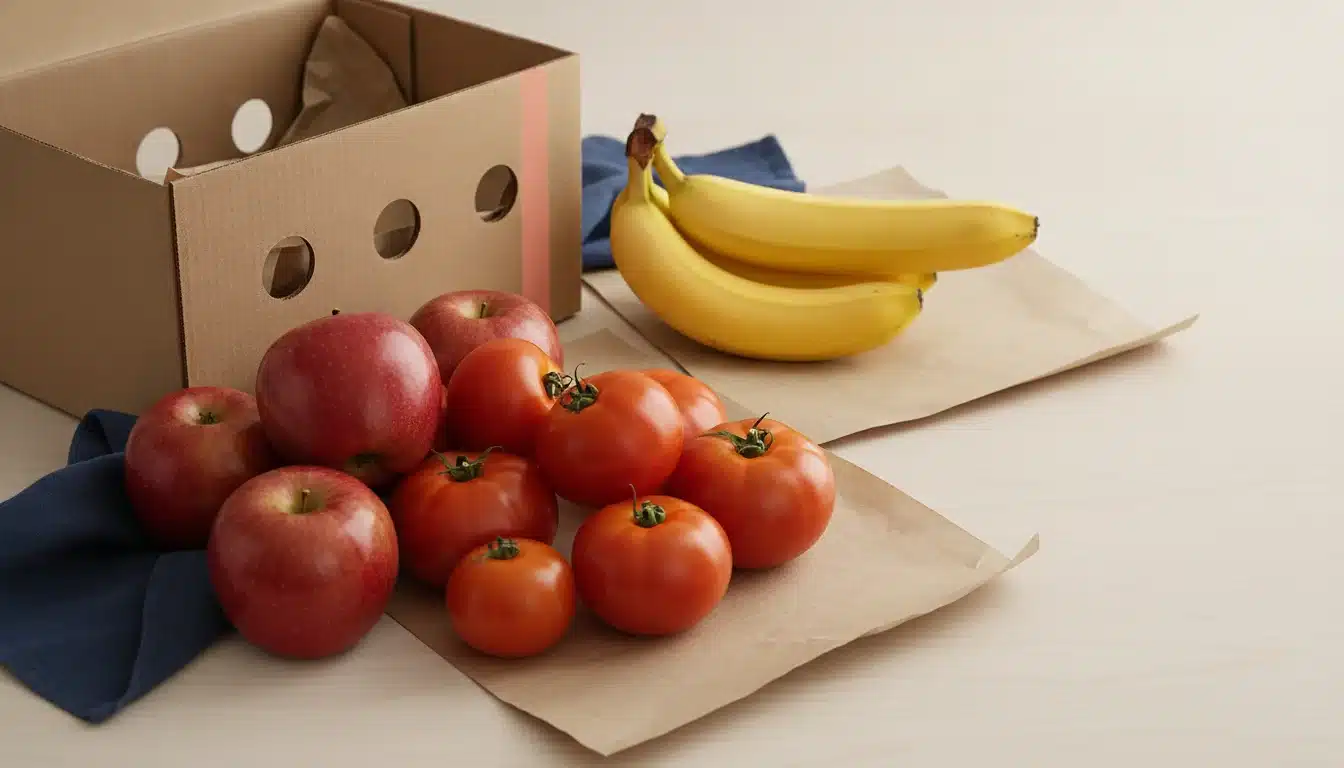
- A ventilated box or crate — slatted or vent-holed packaging that lets air circulate and moisture escape.
- Wrapping for each piece (tissue, paper, or foam nets) so items don’t bruise against each other.
- Gel packs and an insulating liner for delicate or warm-weather shipments.
- Absorbent padding to catch any juice from a bruised item; see ParcelPath’s guide to coolants.
- Tape, the destination address, and a fast, early-week ship plan.
How do you pack produce so it arrives fresh?
Produce fails from bruising, heat, and trapped moisture. Cushion, ventilate, and ship fast to beat all three — and pick items that still have ripening to do.
- Choose firm, just-ripe produce. Items keep ripening in transit, so ship slightly under-ripe; never ship bruised or overripe pieces.
- Wrap each piece. Wrap individually in tissue, paper, or foam nets so nothing knocks together or transfers bruises.
- Pack in a ventilated box. Use a vented box or crate so airflow carries off heat and humidity; line the bottom with absorbent padding.
- Add cold (when needed). For delicate items or summer shipments, add gel packs and an insulating liner. In cool weather, vent the box to use the outside air as a natural refrigerator.
- Seal, mark, and ship fast. Tape seams, mark “Perishable — This Side Up,” and ship a fast service early in the week.
How do you ship produce with ParcelPath, step by step?
- Create your free ParcelPath account. No monthly fee; save your details once.
- Enter the package details. Destination ZIP, packed weight, and box dimensions.
- Compare discounted rates. Pick a fast 2-3 day (or overnight for delicate) service — speed is freshness.
- Pay and print. Pay only for the label — no platform fee — and print at home.
- Ship early in the week so produce isn’t sitting in a facility over the weekend.
How much does it cost to ship produce?

Shipping produce costs a fraction of retail for most items in 2026, driven by weight, distance, speed, and whether you add gel packs. Hardy items like apples ship affordably on ground; soft fruit like strawberries needs gel packs and overnight, which costs more. Temperature-controlled carrier services exist for larger shipments, starting at a higher price point.
Counterintuitively, more cold isn’t always better — many fruits bruise or develop “chill injury” if shipped too cold. Match the method to the item: ventilation and speed for hardy produce, gel packs and overnight only for the delicate stuff.
Hardy or delicate — what changes?
| Produce | Method | Why |
|---|---|---|
| Apples, citrus, hard squash | Wrap, ventilated box, ground OK | Hardy; tolerate a few days in transit |
| Tomatoes, peaches, pears | Ship firm, individually wrapped, fast | Bruise easily and keep ripening |
| Berries, leafy greens | Clamshell, gel packs, overnight | Highly perishable and delicate |
| Bananas | Ship green, cushioned, fast | Ripen quickly; green travels best |
What goes wrong when shipping produce — and how do you avoid it?
- No ventilation. Trapped moisture grows mold. Use a vented box or crate.
- Shipping overripe. It arrives mushy. Pick firm, just-under-ripe items.
- Items knocking together. Bruising spreads. Wrap each piece.
- Too cold or too slow. Chill injury or spoilage. Match cold to the item and ship fast.
- Paying retail. Walking into a carrier counter forfeits the 60-89% discount. Create the label through ParcelPath instead.
Ship your produce for less
Create a free ParcelPath account, compare discounted fast UPS and USPS rates, and print your label in minutes — no monthly fee, no minimums.
Get discounted shipping ratesFAQ: How to Ship Produce
How do you ship fresh produce?
Pick firm, just-ripe items, wrap each piece, pack them in a ventilated box that lets air circulate, add gel packs and insulation for delicate or warm-weather shipments, and ship a fast service early in the week.
How much does it cost to ship produce?
Most produce ships at up to 89% off retail through ParcelPath’s discounted rates, depending on weight, distance, speed, and gel packs. Hardy items like apples are cheapest; delicate berries needing overnight and cold cost more.
Do I need to refrigerate produce when I ship it?
It depends. Hardy items like apples and citrus ship fine ventilated at room temperature for a few days; delicate items like berries need gel packs and fast service. Avoid over-cooling — many fruits suffer chill injury if shipped too cold.
Why is ventilation important for shipping produce?
Produce gives off heat and moisture, and trapped humidity in a sealed box grows mold quickly. Vented boxes or crates let air circulate so the produce stays drier and fresher.
Should I ship produce ripe or under-ripe?
Slightly under-ripe. Fruit and many vegetables keep ripening after picking, so firm, just-under-ripe items arrive at their best rather than overripe.
Is ParcelPath really free to use?
Yes. No monthly fee, no subscription, no minimums. You pay only for postage and get UPS and USPS rates 60-89% below retail.
What’s the best day to ship produce?
Monday or Tuesday with a fast service, so the produce isn’t sitting in a sortation hub over the weekend.
Do I need a printer to ship produce with ParcelPath?
No. Print at home, or use a UPS mobile barcode or USPS Label Broker code to print free at a counter.
Methodology & sources: Ventilation, ripeness, and temperature guidance are drawn from ParcelPath’s produce-shipping guides and published cold-chain practice. Primary references: USA Refrigerated Freight — How to Ship Fresh Produce, GoShip — Shipping Fresh Produce, Tive — Produce Transportation Temperature & Humidity Guide, Citrus Freight — Refrigeration Guidelines for Produce, and Patterson — Guide to Shipping Produce. No reader anecdotes were used; figures trace to platform and industry sources.
Part of our Shipping Guides hub.
In this section:


