
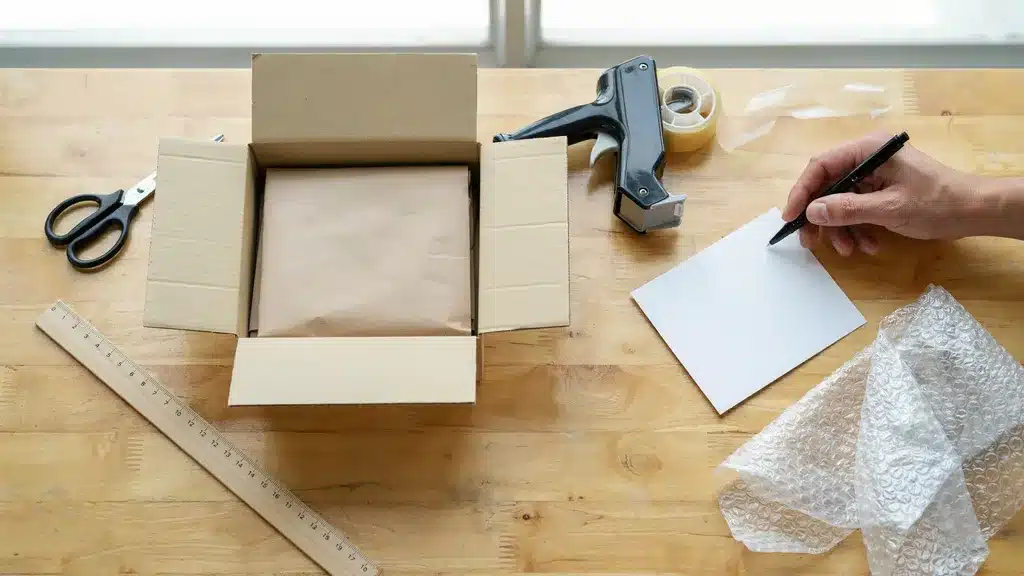
ParcelPath’s shipping how-to guides are step-by-step tutorials for common shipping jobs: packing and labeling a box, choosing between USPS and UPS, sending certified mail, shipping internationally and shipping specialty items like frozen food. Each guide starts with a direct answer, lists the steps in order, and links to the official USPS or UPS rules behind them.
Use this page as the index. Start with the fundamentals if you’re new to shipping, or skip straight to the carrier or item you’re dealing with today.
How Are These Shipping How To Guides Organized?
The guides fall into five groups: fundamentals that apply to every package, carrier-specific walkthroughs, USPS mail services, specialty shipments, and item-by-item packing guides. Each guide follows the same pattern of a short answer first, numbered steps, then the details and exceptions.
The guides don’t list prices, because carrier rates change every year and depend on your box, weight and route. Where cost matters, they explain what drives the price and send you to a live quote.
Which Guides Cover the Shipping Fundamentals?
These guides cover the skills that affect every label you buy, whichever carrier you choose.
- Start here: How to ship a package walks through the whole job, from picking a box and packing it to buying a label and handing the package to USPS or UPS.
- Pick the right service: Best way to ship a package compares speed, cost and protection so you can match the service to what you’re sending.
- Know the cost before you buy: Estimate shipping cost shows how weight, zones and dimensional weight combine into a price.
- Spend less on every label: How to ship for less covers right-sizing boxes, choosing slower services when you can, and avoiding retail counter prices.
- Address and label it correctly: How to address a box for shipping and the shipping labels guide explain where everything goes and why it matters.
Dimensional weight trips up new shippers more than any other pricing rule. USPS and UPS both bill large, light boxes by their size rather than their scale weight, so a big box of pillows can cost more than a small box of books. The estimating guide shows how to run that math before you choose a box.
Which Guides Walk Through a Specific Carrier?
Each carrier has its own services, drop-off network and label rules. These guides take one carrier at a time.
- USPS: the USPS shipping guide covers USPS Ground Advantage (2–5 business days), Priority Mail (1–3 business days), Priority Mail Express, Flat Rate boxes and free package pickup.
- UPS: the UPS shipping guide covers UPS Ground (1–5 business days by distance), the air services, and drop-off at The UPS Store and UPS Access Point locations.
- FedEx: the FedEx shipping guide explains FedEx Ground, Home Delivery and Express service tiers for readers who use FedEx.
- Comparing them: The major delivery companies compared lays out where each national carrier is strongest.
No carrier is best for everything. USPS usually wins on small, light packages and residential delivery, and UPS is often stronger for heavier boxes and time-definite air service. The quickest way to settle it for one package is to compare both. With ParcelPath you can do that in the ParcelPath rate calculator, with discounts of up to 85% off UPS and up to 89% off USPS. It’s free to use, with no subscription, per-label fee or minimums.
Which Guides Cover USPS Mail Services?
Some USPS services exist for legal proof rather than package delivery, and they have their own forms and steps.
- How to send certified mail covers the certified mail form, return receipt options (green card or electronic), tracking, and what happens if nobody signs.
- How to ship to a PO Box explains why only USPS delivers to a standard PO Box address and how Street Addressing changes that at some post offices.
Certified mail is the usual choice for legal notices, tax correspondence and lease terminations, because it gives the sender a mailing receipt and a delivery record from USPS.
Which Guides Handle Specialty Shipments?
Some shipments come with extra rules, such as customs forms, hazardous material markings or tight temperature limits. These guides front-load the preparation, because specialty shipments usually fail before they leave, not in transit.
- How to ship internationally covers customs declarations, prohibited and restricted items, duties and taxes, and choosing between postal and express international services.
- How to ship frozen food covers insulated coolers, dry ice limits and markings (UN1845), and picking an overnight or 2-day service so food arrives frozen.
- Breast milk shipping explains how to ship frozen breast milk safely with dry ice.
- How to ship a large item without a box covers wrapping, carrier size limits and when an item is too big for parcel service.
- How to ship freight picks up where parcel limits end, for pallets and items over 150 lbs.
For freight, ParcelPath’s PalletPath service quotes LTL shipments through the PalletPath freight quote tool.
Where Are the Item-by-Item Packing Guides?
When the question is “how do I ship this particular thing?”, start with the shipping guides by item. That index covers clothing, auto parts, electronics, sports equipment and more. Popular examples include:
- How to ship electronics: anti-static packing, battery rules and double-boxing.
- How to ship fragile items and valuables: cushioning, box-in-box packing and insurance.
- How to ship books: when USPS Media Mail fits and how to pack books flat.
Which Shipping How To Guide Should You Start With?
If you’ve never shipped a package before, read the how to ship a package guide first, because every other guide builds on it. If you ship often, go to the carrier guide you use most, then run your typical box through the estimating guide to make sure you aren’t paying retail counter prices.
Sellers who ship every day get the most from the fundamentals. Right-sized boxes, correct dimensions on the label and a quick carrier comparison prevent most adjustment charges and overpayments. For an estimate before you have exact dimensions, our shipping calculator guide explains what each input does.
Want broader reading? The ParcelPath resources hub collects packaging, labeling and carrier references, and the ParcelPath blog covers carrier news and rate-change explainers.
Frequently Asked Questions
What do these shipping how to guides cover?
They cover the everyday jobs of shipping: packing and addressing a box, buying a label, choosing between USPS and UPS services, sending certified mail, shipping internationally and handling specialty items like frozen food or large items. Each guide gives a direct answer first, then numbered steps, then the carrier rules and exceptions that apply.
Do these how to guides work for both personal and business shipping?
Yes. The steps for measuring, packing, labeling and choosing a service are the same whether you mail one gift or ship fifty orders a day. Only the volume changes. Businesses that ship often get the most from the fundamentals guides, because consistent box sizes and correct dimensions prevent carrier adjustment charges.
Which how to guide should a first-time shipper read?
Start with the how to ship a package guide. It covers the full sequence: choosing a box, packing and sealing it, weighing and measuring, buying a USPS or UPS label, and dropping it off or scheduling a pickup. The carrier and specialty guides assume you know these basics.
Why don’t the how to guides list exact shipping prices?
Carrier prices change at least once a year and depend on weight, dimensions, distance and service, so a printed number is soon wrong. The guides explain what drives the cost, and the ParcelPath rate calculator shows live discounted USPS and UPS prices for your exact package and route.
Sources
- USPS Ground Advantage: service standards and size limits
- UPS: Package Dimensions, Size Limits and Weight Guide
- UPS Shipping Support
Part of our Shipping Resources hub.
In this section:


